

When a family member enters hospice care, the goal is comfort, dignity, and steady support during one of life’s hardest chapters. Most hospice teams deliver on that promise. Still, hospice neglect does happen, and it can be difficult to recognize until harm has already occurred. If your loved one seems more confused, more withdrawn, or more physically frail than their illness alone would explain, it is worth taking a closer look at the care they are receiving.
Did You Know?
National researchers have long estimated that roughly 1 in 10 adults age 60 and older experience some form of caregiver abuse or neglect each year, though a more recent survey found the rate closer to 1 in 5, according to the National Council on Aging. Hospice patients are not exempt from that risk.
What Is Hospice Neglect
Hospice neglect occurs when a provider, whether a nurse, aide, chaplain, or the agency as a whole, fails to deliver the basic care a terminally ill patient is entitled to under an established plan of care. This can include missed medication doses, infrequent visits, or a failure to track changing symptoms. Unlike active abuse, neglect is often a matter of omission, care that should have happened but did not.
Patients receiving hospice care are frequently unable to advocate for themselves, which is what makes this type of neglect so dangerous and so easy to miss in its early stages.
Why Hospice Neglect Happens
Hospice neglect rarely comes down to a single careless caregiver. It is more often the product of systemic pressure, including agencies stretched across too many patients, high turnover, and aides undertrained for the complexity of end-of-life care. Families whose loved one is in a nursing facility should also watch for understaffing in nursing homes, since hospice teams often work alongside facility staff who may already be spread thin.
In June 2024, the National Partnership for Healthcare and Hospice Innovation released a white paper calling elder neglect a “silent epidemic” among hospice and palliative care patients, according to AAHPM Quarterly. Hospice clinicians interviewed for the report said outright abuse is less common than ongoing neglect tied to family dysfunction or an overwhelmed caregiver, a reminder that this problem is documented, not rare.
Warning Signs of Hospice Neglect to Watch For
Recognizing hospice neglect early can keep a small oversight from turning into a life-threatening complication.
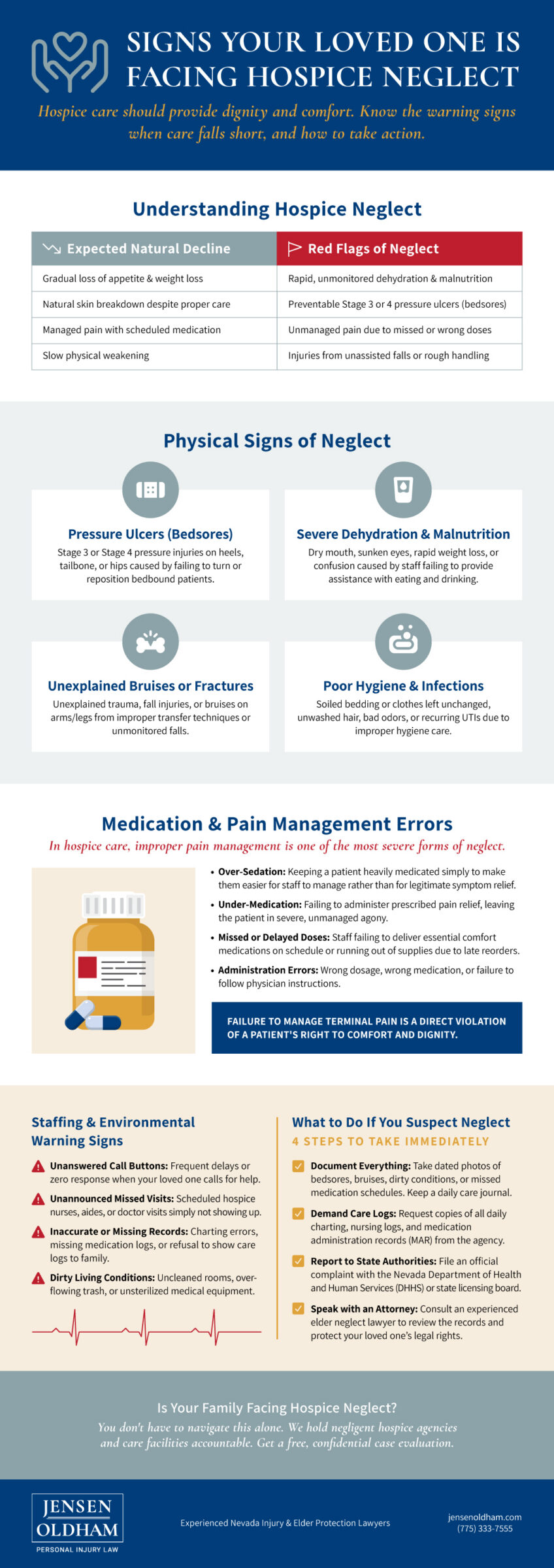
Physical Warning Signs
Common physical signs of neglect in hospice care include:
- Unexplained bruising, cuts, or skin tears
- New or worsening bedsores that were not present before hospice care began
- Sudden weight loss or visible signs of dehydration
- Missed medication doses or unmanaged pain
- Poor personal hygiene, including soiled clothing or bedding left unchanged
- Bedsores and pressure injuries
Bedsores develop when a patient is left in the same position too long without repositioning. New or worsening pressure injuries are one of the clearest physical markers of neglect, since preventing them is a basic, expected part of any hospice plan of care.
Dehydration and Malnutrition
Dry lips, dark urine, confusion, and rapid weight loss can all point to inadequate hydration or nutrition support. Appetite naturally declines near the end of life, so families sometimes assume these changes are simply part of the disease process. A hospice team should still track intake, and a pattern of unaddressed dehydration is worth raising directly with the agency.
Emotional and Behavioral Warning Signs
- Sudden withdrawal, fearfulness, or reluctance to speak openly in front of a caregiver
- Increased agitation, confusion, or mood swings that do not match the medical picture
- Staff who discourage or limit private visits with your loved one
- A pattern of canceled, rushed, or shortened visits
Environmental Warning Signs
Unclean linens, a strong odor in the room, clutter that creates a fall risk, or medical equipment that looks broken or unused can all point to inconsistent care. If your loved one receives hospice services inside a skilled nursing facility, these signs can overlap with nursing home negligence, so it is worth asking who is responsible for the gap.
What to Do if You Suspect Hospice Neglect: 5 Steps
If something feels off, trust your instincts and start building a record. It’s always better to be safe rather than sorry.
- Document what you see, including dates, times, and photos where appropriate
- Ask the hospice agency’s administrator for a written explanation of the current care plan
- Request a meeting with the full interdisciplinary care team
- Contact Nevada’s Aging and Disability Services Division at 888-729-0571 to report suspected abuse or neglect
- File a complaint with the hospice agency’s state licensing body or Medicare’s hospice complaint line
Nevada law allows any concerned person, not only a family member, to report suspected elder abuse or neglect, and reports stay confidential. NRS 200.5093 requires nurses and other hospice staff to report suspected abuse within 24 hours, and NRS 193.167 allows enhanced sentencing when a victim is 65 or older. If your loved one is in immediate danger, call 911 first. Our elder care legal advice page walks through the next steps in more detail.
When Hospice Neglect Requires Legal Action
No family should have to wonder whether a dying loved one is safe in the hands of the people paid to care for them. When hospice neglect leads to a preventable injury, infection, or death, Nevada law may allow the family to pursue a claim against the responsible agency.
Jensen Oldham Personal Injury Law has spent decades representing injured people across Reno, Sparks, and Northern Nevada. If you suspect hospice neglect and want a Board Certified personal injury specialist to review your situation, our personal injury lawyers in Reno are ready to help you decide on the right next step.