
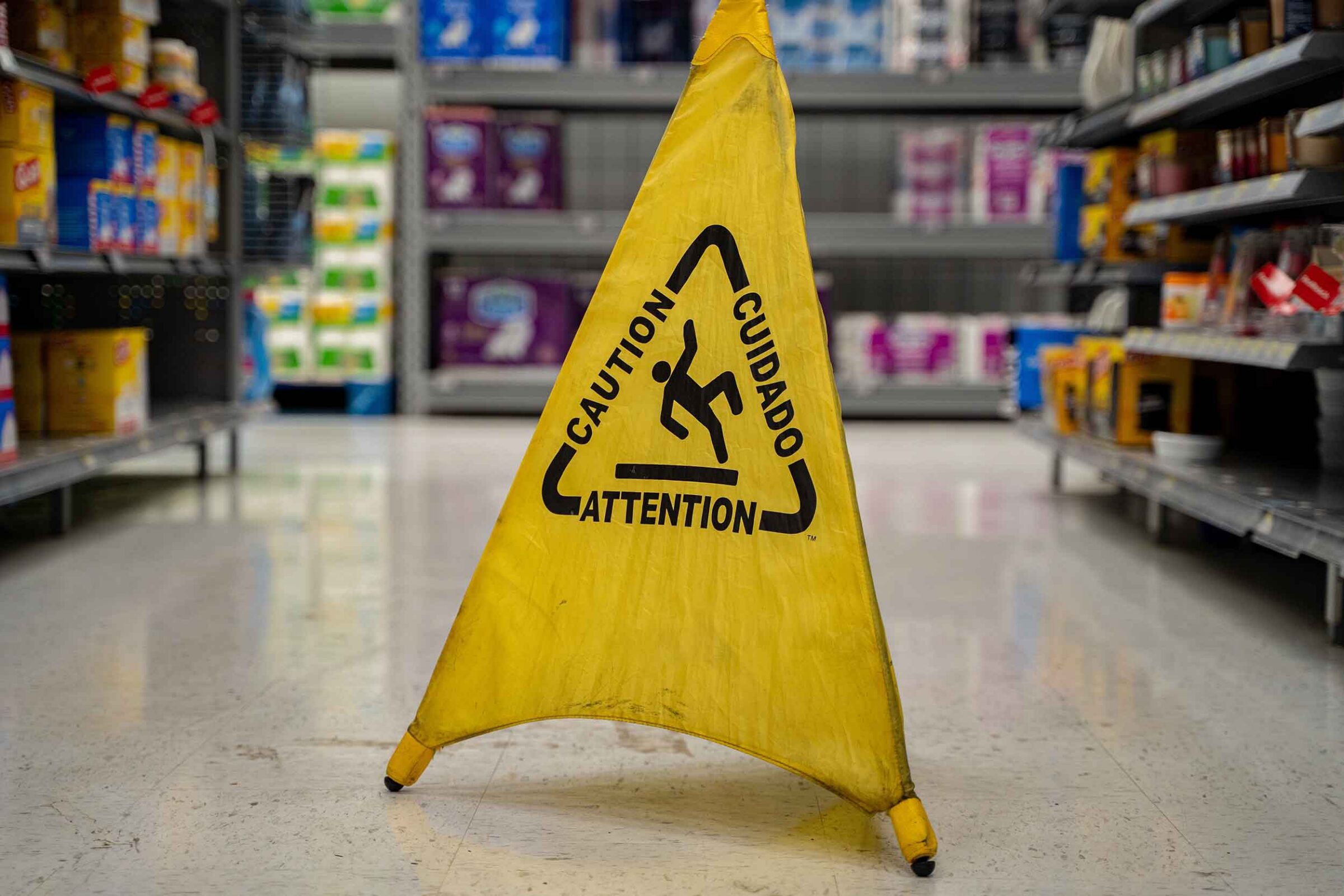
A routine trip to your neighborhood Smith’s, Safeway, Raley’s, or WinCo can change the course of your life in an instant. From a leaked refrigeration unit in the dairy aisle to a shattered jar of oil left unmarked on the floor, supermarkets are packed with hidden environmental hazards. When corporate management cuts corners on safety and shifts focus away from clean floors, unsuspecting shoppers are the ones who pay the physical and financial price.
If you or a loved one is currently dealing with severe injuries from an accident, understanding how grocery store slip and fall settlements are calculated and processed under Nevada law is essential. While retail giants carry multi-million dollar commercial liability insurance tracking, their corporate claims adjusters are trained to minimize, delay, or outright deny your claim. Knowing your rights is your first line of defense.
What Constitutes a Grocery Store Slip and Fall Settlement?
A grocery store slip and fall settlement is a formal, legally binding financial resolution reached between an injured victim and the supermarket’s corporate insurance carrier. Instead of moving forward with a lengthy, stressful jury trial in a Washoe County court, both parties agree on a lump-sum compensation amount. In exchange for this payout, the victim signs a full release waiver relinquishing any future legal claims stemming from that specific incident.
To secure a fair settlement, you cannot simply show that you fell and walked away with an injury. Nevada premises liability rules require you to explicitly prove that the business was legally negligent. This means proving that store management or their staff either directly created the hazardous condition, had actual knowledge that the danger existed but failed to clear it, or should have known the hazard was present through standard, reasonable store inspections.
When negligence is clearly established by a qualified Reno slip and fall lawyer, your settlement is calculated to systematically reimburse you for your economic losses (such as medical bills and lost wages) and non-economic damages (such as pain, suffering, and physical limitations).
“Bob and his associates are professional, knowledgeable, and truly care about his clients. He takes the time to explain everything clearly, keeps you informed throughout the process, and makes sure you feel supported every step of the way. His experience and dedication gave me confidence during a stressful time.”
— Elizabeth N., Reno Client
4 Things to Know About Grocery Store Slip and Fall Settlements
Navigating a claim against a massive supermarket chain involves avoiding high-stakes legal traps. Here are four foundational elements regarding the settlement process that every injury victim should keep in mind:
1. You Must Prove Constructive Notice
Timing is the most critical element in retail negligence cases. If a shopper accidentally drops a liquid item and you step in it five seconds later, a court will rarely hold the business liable because the staff lacked a reasonable window of time to discover and correct the danger. However, if a spill is left unaddressed for 20, 30, or 45 minutes while employees actively walk past it, the business has crossed into “constructive notice.” We routinely use corporate “sweep sheets,” electronic logs, and surveillance video to establish exactly how long a hazard sat neglected.
2. Retail Adjusters Will Attempt to Shift the Blame
Under Nevada’s modified comparative negligence statutes, an insurance company can drastically reduce your settlement or eliminate it entirely if they prove you were primarily responsible for your own accident. Adjusters will scour camera footage to claim you were distracted by your smartphone, ignoring visible warning signs, running through the aisles, or wearing improper footwear. Defeating these arguments requires an aggressive strategy from a dedicated slip and fall attorney.
3. Early Lump-Sum Offers Are Designed to Protect the Store
If a corporate claims representative reaches out within days of your accident, offering an immediate check to cover your initial emergency room visit, do not sign their paperwork. Soft-tissue tears, herniated discs, and traumatic brain injuries frequently involve a delayed onset of symptoms that may not fully manifest for weeks. Accepting an early, lowball offer permanently waives your right to seek additional compensation once the true, long-term costs of your medical rehabilitation come to light.
4. How Long a Hazard Exists Alters Your Total Case Value
The timeline of the danger directly dictates the strength of your case. Determining liability heavily rests on whether the business maintained a proactive, documented monitoring routine. If you are uncertain whether the facts of your accident warrant a lawsuit, checking the legal guidelines on how long a hazard must exist to require a lawyer can help clarify your path forward before you begin formal settlement talks.
Most Common Ways People Have Slips and Falls at Grocery Stores

Supermarkets are high-traffic environments where thousands of moving parts must be constantly monitored to prevent injuries. According to national data compiled by the National Floor Safety Institute (NFSI), falls account for over 8 million emergency room visits across the United States annually, with slick walking surfaces serving as a leading factor in retail premises claims.
Within a standard grocery store layout, specific areas represent recurring danger zones:
- The Produce Section: Automated produce misters frequently overspray, leaving fine coatings of water across slick linoleum or polished concrete walkways. Dropped fruits like grapes, loose berries, and crushed lettuce leaves create immediate, low-traction slip traps if mats are not properly positioned.
- The Entrance and Exit Lobbies: During Northern Nevada’s volatile winter months, hundreds of customers track slush, mud, and melting ice past the automatic doors. If high-absorbency commercial walk-off mats are missing or fully saturated, entryways instantly become hazardous.
- Frozen Food and Dairy Aisles: Commercial cooling units, walk-in freezers, and reach-in display cases are prone to condensation leaks, clogged drainage lines, and mechanical failures that cause clear water to pool directly onto public walking paths.
- The Floral Department: Spills from bucket changes, dropped petals, and uncleaned water over-spray routinely cause unexpected falls near high-traffic front register lanes.
- Aisleway Item Spills: Liquid laundry detergent, broken condiment glass jars, and cooking oil leaks require immediate isolation with visible caution cones and prompt mopping. Leaving a known spill exposed while an employee leaves to find a mop is a textbook example of retail negligence.
How Can Our Reno Law Team Help With Your Case?
At Jensen Oldham Personal Injury Law, we understand that physical evidence in a supermarket vanishes quickly. Within hours of a major injury, corporate risk managers frequently replace worn floor mats, clean up the spill, and overwrite security footage as part of their standard operating procedures.
When you partner with our firm, we step in immediately to preserve your rights and handle the administrative burden by:
- Issuing formal, legally binding spoliation letters to compel the grocery store to preserve all interior CCTV security camera recordings capturing your fall and the hour leading up to it.
- Subpoenaing internal corporate incident reports, employee shift logs, and third-party facility maintenance records.
- Shielding you from predatory insurance practices by managing all direct communications, recorded statements, and settlement negotiations on your behalf from day one.
- Structuring a comprehensive medical damages profile alongside regional healthcare specialists to ensure your future care requirements are accurately factored into final settlement demands.
If you are dealing with injuries that occurred on a commercial property, reviewing our legal overview on what to do if you are injured at a business will give you an immediate action plan to protect your recovery process.
Don’t Settle for Less
You should never have to compromise your long-term physical recovery or take on massive medical debt because a major commercial business failed to keep its floors safe for the public. When corporate grocery operations understaff their locations or skip out on routine safety sweeps, they must be held accountable for the damage they cause.
Whether your accident occurred in a local supermarket or fits into the complex framework of a casino slip and fall, our trial-tested legal team is ready to stand up to corporate defense networks on your behalf. Take control of your recovery and put an experienced team in your corner.
Contact Jensen Oldham Personal Injury Law today to request your completely free, confidential case consultation with an experienced personal injury attorney. We operate strictly on a contingency fee framework—meaning we advance all litigation expenses and court fees, and you never owe us a single dollar out-of-pocket unless we successfully secure a financial settlement or court verdict in your favor.
Disclaimer: The information provided on this site is for general information purposes only. The information you obtain at this website is not, nor is it intended to be, legal or medical advice. You should consult an attorney or doctor for advice regarding your own individual situation. Use of this website or submission of an online form does not create an attorney-client relationship.